Tuesday, February 26, 2019
Revisions - Changing of the Mother's Character
Through many attempts at finding a new actress to be play the mother, whether it be a young person with make-up or an actual adult woman, my co-director and I found the acting of a mother unappealing. Afterwards, after some discussion, we decided to abandon the idea of the mother. This didn't mean that the entirety of the character was going to be absent from the film, but just that the relation between the daughter and the "mother" would different. Instead, the audience would only be able to infer that the two of them have some sort of relationship, but the true backstory of it would only be revealed in the full-length film.

Monday, February 25, 2019
Revisions - Addition of the Final Scene (and More)
After the screening of our film to our peers and reviewing the comments and critiques they presented us, my co-director and I discussed ways we could improve the actual story of the film (due to some viewers having a difficult time understanding what was happening during it).The solution we came up with was to add a scene of the couple in the car where the daughter kills the boyfriend, and thereby, making her intentions with the knife very clear.
Thursday, February 14, 2019
Marketing Plan
Every film has many advantageous ways to advertise itself due to it being a motion picture. Among these many different methods, there are three that are more prevalent than the others; them being TV commercials, print ads, and internet ads.
Starting off with the TV commercials, or more specifically, movie trailers can be broadcast in between an audience's desired program so that they can be guaranteed to view it and show some of the most pivotal or exciting scenes to entice the audience to watch it in upon its release. Different spaces of air time cost different amounts based on the size of their audience, though. But this is exactly what a soon-to-be-successful movie needs: exposure. Therefore, if the producers of the film are able to pay larger sums of money to obtain good air time, then those costs will be paid back with more due to the increase of people go to watch it in theaters versus not making a large profit from not buying good air time.
The print ads for a film would primarily be movie posters that can be put virtually anywhere. Most of the time, they are put either in or nearby movie theaters so that the theater can entice passerby to watch them inside. But in order to increase exposure of the film, spreading the movie posters would be required. Now, many places would allow the posters to be hung up for free, but in some cases the producers would have to supply a small sum of money to purchase the "ad space" at that location. All in all, putting up the posters wouldn't cost the producers too much money, but actually making them could. The size of them can vary but the important part about them is that they all show the title of the film, the cast and most important contributors, along with characters and scenes from the film as the main image of the poster. This would help audiences understand what kind of movie it is and whether or not they would like to see a movie of that kind of genre.
The internet a would be short clips put together that show the movie poster at the end. These would go on social media sites like posts on Instagram or ads/public stories on Snapchat as well as many others. This is really meant to just show audiences that this film is here and that if the very short compilation of clips interests them, they can view the trailer and decide if they would like to watch it when it's released.


Starting off with the TV commercials, or more specifically, movie trailers can be broadcast in between an audience's desired program so that they can be guaranteed to view it and show some of the most pivotal or exciting scenes to entice the audience to watch it in upon its release. Different spaces of air time cost different amounts based on the size of their audience, though. But this is exactly what a soon-to-be-successful movie needs: exposure. Therefore, if the producers of the film are able to pay larger sums of money to obtain good air time, then those costs will be paid back with more due to the increase of people go to watch it in theaters versus not making a large profit from not buying good air time.
The print ads for a film would primarily be movie posters that can be put virtually anywhere. Most of the time, they are put either in or nearby movie theaters so that the theater can entice passerby to watch them inside. But in order to increase exposure of the film, spreading the movie posters would be required. Now, many places would allow the posters to be hung up for free, but in some cases the producers would have to supply a small sum of money to purchase the "ad space" at that location. All in all, putting up the posters wouldn't cost the producers too much money, but actually making them could. The size of them can vary but the important part about them is that they all show the title of the film, the cast and most important contributors, along with characters and scenes from the film as the main image of the poster. This would help audiences understand what kind of movie it is and whether or not they would like to see a movie of that kind of genre.
The internet a would be short clips put together that show the movie poster at the end. These would go on social media sites like posts on Instagram or ads/public stories on Snapchat as well as many others. This is really meant to just show audiences that this film is here and that if the very short compilation of clips interests them, they can view the trailer and decide if they would like to watch it when it's released.
Movie Poster Examples


Instagram Account Example Images


Thursday, January 31, 2019
Target Audience Research - Get Out
The genre of Get Out is quite similar to the genre of of the film my co-director and I are producing; mystery and thriller. This category of genres for Get Out comes with the rating of R, but our film wont have the serious messages and themes that this film has, so ours will most likely be a PG-13 film. Therefore, our target audience would be a majority of people in their younger ages, perhaps from at leats 13 to ealry-to-mid 40's; anyone who could handle and enjoy the suspense generated by the movie.
This movie was a new release that centered around an interracial couple meeting the girlfriend's parents that was realeased back in 2017. Of course, the people responsible for the advertising of this movie would wany to showcase aspects of the film that would relate to viewers. This would apply to the persuasive technique of advertising by means of anxiety, fear, and harsh realizations of the world generated by a film of these genres and concepts. They did this by playing a few iconic and pivotal scenes from the movie that showed all of the emotions of the main characterbeing pushed to the extremes.
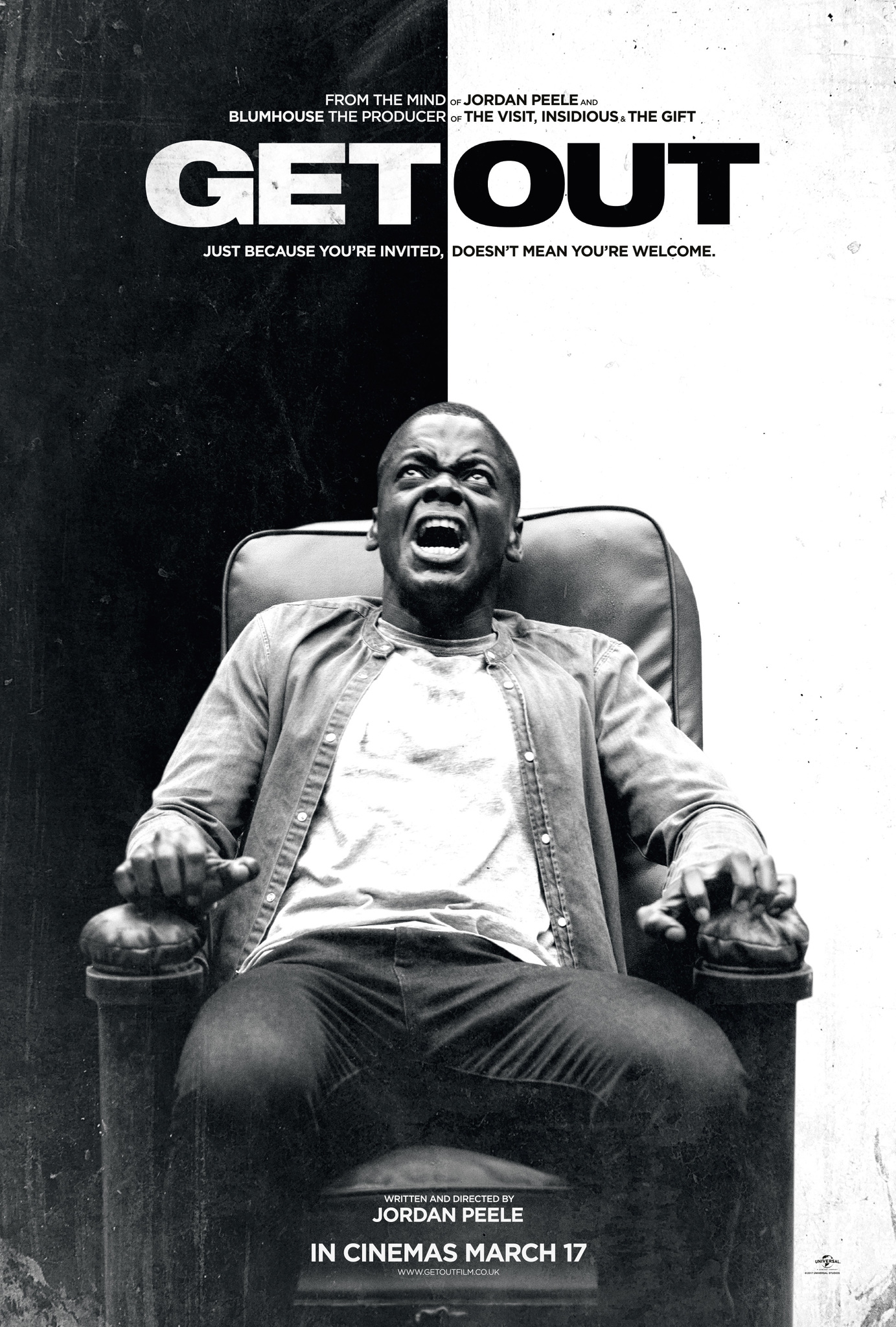
Typically, every movie's primary form of advertisement is through a few differernt forms of trailers, that give audiences a brief look into some parts of the movie. Get Out did this by showing some of the previously mentioned emotional scenes, a little bit of action, and suspenseful/climactic scenes from the movie in order to entice audiences to watch it in theatres once it's released. The largerst platform that this film's advertisements are being realeased on is on the television where it's played in between commercials for no more than 20 to 30 seconds. This film, however, didn't have much to do with online advertising unless a large screen and sound would be used. They did this to make the viewers of these trailers get the full experience of what would come in the film. One smaller method of advertisement would include critics' comments and written reviews of this film in magazines, and my co-director and I would mimic this strategy to the letter in order to achieve the most success in out advertising efforts.
This movie was a new release that centered around an interracial couple meeting the girlfriend's parents that was realeased back in 2017. Of course, the people responsible for the advertising of this movie would wany to showcase aspects of the film that would relate to viewers. This would apply to the persuasive technique of advertising by means of anxiety, fear, and harsh realizations of the world generated by a film of these genres and concepts. They did this by playing a few iconic and pivotal scenes from the movie that showed all of the emotions of the main characterbeing pushed to the extremes.
Typically, every movie's primary form of advertisement is through a few differernt forms of trailers, that give audiences a brief look into some parts of the movie. Get Out did this by showing some of the previously mentioned emotional scenes, a little bit of action, and suspenseful/climactic scenes from the movie in order to entice audiences to watch it in theatres once it's released. The largerst platform that this film's advertisements are being realeased on is on the television where it's played in between commercials for no more than 20 to 30 seconds. This film, however, didn't have much to do with online advertising unless a large screen and sound would be used. They did this to make the viewers of these trailers get the full experience of what would come in the film. One smaller method of advertisement would include critics' comments and written reviews of this film in magazines, and my co-director and I would mimic this strategy to the letter in order to achieve the most success in out advertising efforts.
Target Audience Research - Glass
The genre of Glass may have two genres differing from ours, being fantasy and drama, the thriller aspect is constant in both of our films.This category of genres come with the rating of PG-13 which means our film would then be PG-13 as well. Therefore, our target audience would be a majority of people in their younger ages, perhaps from at leats 13 to ealry-to-mid 40's; anyone who could handle and enjoy the suspense generated by the movie.
This movie is the final film to a trilogy of Unbreakable (2000) and Split (2016) which gained a lot of popularity in a short amount of time due to the fact that Split was an unannounced sequel to Unbreakable; viewers only figured this out after watching the increasingly poplular "end credits scene" that showed the main character of the forst film speaking to another person. Of course, the people responsible for the advertising of this movie would include some parts of the first two movies to help connect them and remind audiences as to why they should see it. This would apply to the persuasive technique of advertising by means of nostalgia from the prequel to this film along with the suspense and excitement generated by a film of these genres. They did this by showing a few moments of each characters' "superpowers" that were showcased in their own respected films that they starred in.

Typically, every movie's primary form of advertisement is through a few differernt forms of trailers, that give audiences a brief look into some parts of the movie. Glass did this by showing some of the previously mentioned character showcases, a little bit of action, and suspenseful/climactic scenes from the movie in order to entice audiences to watch it in theatres once it's released. The largerst platform that this film's advertisements are being realeased on is on the television where it's played in between commercials for no more than 20 to 30 seconds. The other main form of advertisement for this movie (just with Split and Glass because it was released a later time than Unbreakable) is through ads on the internet. Small pop-ups on the sides on any website will show an image of the movie poster or a short clip from a scene from the movie that will entice the viewer to click on them, be taken to the website made specifically for the advertisement for this movie, and purchase tickets to watch it in theatres. One smaller method of advertisement would include critics' comments and written reviews of this film in magazines, and my co-director and I would mimic this strategy to the letter in order to achieve the most success in out advertising efforts. However, one strategy that my co-director and I won't be following is the creation of a small strand of comic books detailing the stories of our main characters. This is because Glass centers around the concept of real life superheros that are similar to those found in comic books, but the main characters in our film aren't.
This movie is the final film to a trilogy of Unbreakable (2000) and Split (2016) which gained a lot of popularity in a short amount of time due to the fact that Split was an unannounced sequel to Unbreakable; viewers only figured this out after watching the increasingly poplular "end credits scene" that showed the main character of the forst film speaking to another person. Of course, the people responsible for the advertising of this movie would include some parts of the first two movies to help connect them and remind audiences as to why they should see it. This would apply to the persuasive technique of advertising by means of nostalgia from the prequel to this film along with the suspense and excitement generated by a film of these genres. They did this by showing a few moments of each characters' "superpowers" that were showcased in their own respected films that they starred in.
Typically, every movie's primary form of advertisement is through a few differernt forms of trailers, that give audiences a brief look into some parts of the movie. Glass did this by showing some of the previously mentioned character showcases, a little bit of action, and suspenseful/climactic scenes from the movie in order to entice audiences to watch it in theatres once it's released. The largerst platform that this film's advertisements are being realeased on is on the television where it's played in between commercials for no more than 20 to 30 seconds. The other main form of advertisement for this movie (just with Split and Glass because it was released a later time than Unbreakable) is through ads on the internet. Small pop-ups on the sides on any website will show an image of the movie poster or a short clip from a scene from the movie that will entice the viewer to click on them, be taken to the website made specifically for the advertisement for this movie, and purchase tickets to watch it in theatres. One smaller method of advertisement would include critics' comments and written reviews of this film in magazines, and my co-director and I would mimic this strategy to the letter in order to achieve the most success in out advertising efforts. However, one strategy that my co-director and I won't be following is the creation of a small strand of comic books detailing the stories of our main characters. This is because Glass centers around the concept of real life superheros that are similar to those found in comic books, but the main characters in our film aren't.
Target Audience Research - Happy Death Day 2U
The genre of Happy Death Day 2U is the exact same as the genre of the film my co-director and I are producing; horror, mystery, and thriller. This category of genres come with the rating of PG-13 which means our film would then be PG-13 as well. Therefore, our target audience would be a majority of people in their younger ages, perhaps from at leats 13 to ealry-to-mid 40's; anyone who could handle and enjoy the suspense generated by the movie.
This movie is a sequel to the film Happy Death Day that was releared back in 2017 which gained a lot of popularity in a short amount of time. Of course, the people responsible for the advertising of this movie would include some parts of the first movie to help connect the two and remind audiences as to why they should see it. This would apply to the persuasive technique of advertising by means of nostalgia from the prequel to this film along with the anxiety, fear, and excitement generated by a film of these genres. They did this by playing a few iconic and pivotal scenes from the first movie as flashbacks from the main character.
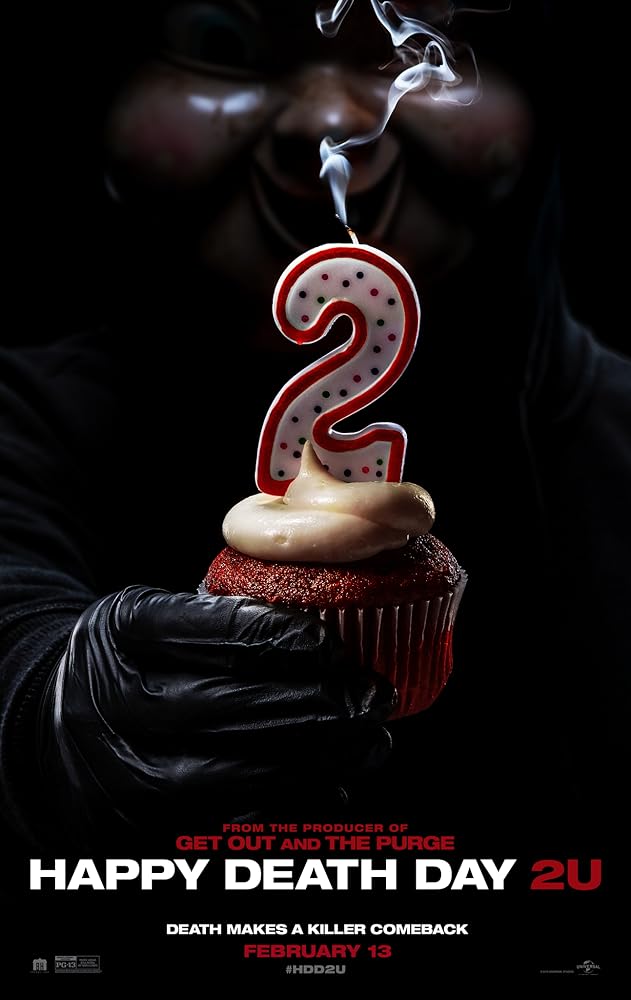
Typically, every movie's primary form of advertisement is through a few differernt forms of trailers, that give audiences a brief look into some parts of the movie. Happy Death Day 2U did this by showing some of the previously mentioned flashbacks, a little bit of action, and suspenseful/climactic scenes from the movie in order to entice audiences to watch it in theatres once it's released. The largerst platform that this film's advertisements are being realeased on is on the television where it's played in between commercials for no more than 20 to 30 seconds. The other main form of advertisement for this movie (along with almost every other movie released in present day) is through ads on the internet. Small pop-ups on the sides on any website will show an image of the movie poster or a short clip from a scene from the movie that will entice the viewer to click on them, be taken to the website made specifically for the advertisement for this movie, and purchase tickets to watch it in theatres. One smaller method of advertisement would include critics' comments and written reviews of this film in magazines, and my co-director and I would mimic this strategy to the letter in order to achieve the most success in out advertising efforts.
This movie is a sequel to the film Happy Death Day that was releared back in 2017 which gained a lot of popularity in a short amount of time. Of course, the people responsible for the advertising of this movie would include some parts of the first movie to help connect the two and remind audiences as to why they should see it. This would apply to the persuasive technique of advertising by means of nostalgia from the prequel to this film along with the anxiety, fear, and excitement generated by a film of these genres. They did this by playing a few iconic and pivotal scenes from the first movie as flashbacks from the main character.
Typically, every movie's primary form of advertisement is through a few differernt forms of trailers, that give audiences a brief look into some parts of the movie. Happy Death Day 2U did this by showing some of the previously mentioned flashbacks, a little bit of action, and suspenseful/climactic scenes from the movie in order to entice audiences to watch it in theatres once it's released. The largerst platform that this film's advertisements are being realeased on is on the television where it's played in between commercials for no more than 20 to 30 seconds. The other main form of advertisement for this movie (along with almost every other movie released in present day) is through ads on the internet. Small pop-ups on the sides on any website will show an image of the movie poster or a short clip from a scene from the movie that will entice the viewer to click on them, be taken to the website made specifically for the advertisement for this movie, and purchase tickets to watch it in theatres. One smaller method of advertisement would include critics' comments and written reviews of this film in magazines, and my co-director and I would mimic this strategy to the letter in order to achieve the most success in out advertising efforts.
Revisions - The Mother's Youthful Appearance
One of crtiques my co-driector and I received was that the relationship between the mom and the daughter was unclear to the audience. There were no dialogue markers to help indicate that the two characters were family and the mother didn't have any makeup on. This made her seem very young (almost as if they were just friends from school) and we have planned on speaking to more of our peers about help on making our mother look older. However, due to her busy schedule, our actress originally cast for the mother doesn't have the time to film with us anymore. We have found another actress who is anxious to join us and we'll keep to the idea to have help on making her look the age that a mother would.
Subscribe to:
Posts (Atom)